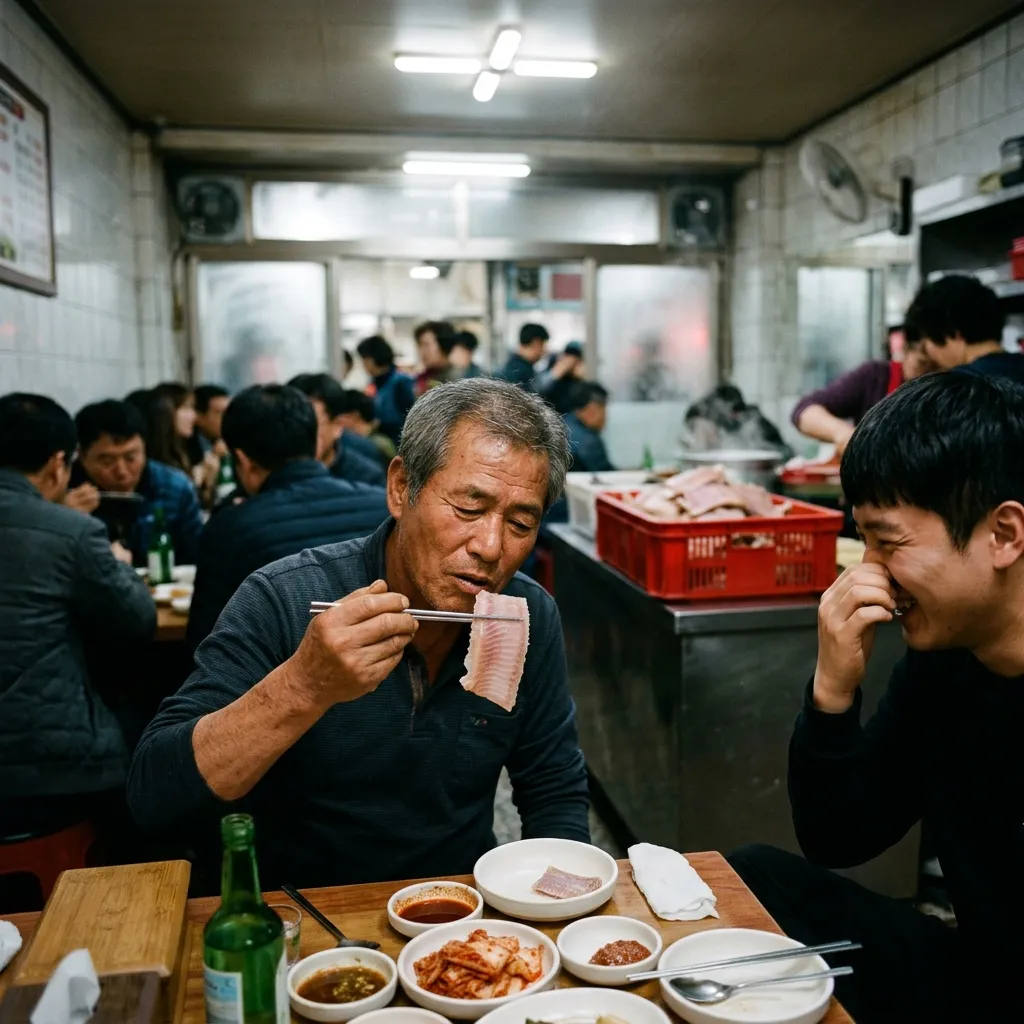
For many travelers visiting the port city of Mokpo, the first stop isn’t a historic landmark or a scenic overlook, but rather a specialized restaurant serving hongeo. To the uninitiated, fermented skate can be an overwhelming introduction to Korean cuisine, possessing an ammonia scent so potent it often sends first timers recoiling from the table. Yet, this pungency is precisely why food enthusiasts journey across South Korea to find it. What begins as a dare for some becomes a lifelong craving for others, turning a once shunned aroma into a symbol of regional pride and culinary sophistication.
The science behind the smell is rooted in the biology of the skate itself. Unlike most fish, skates and rays store high levels of urea to maintain their internal fluid balance. Once the fish dies, this urea breaks down into ammonia and trimethylamine, which effectively ferments the flesh instead of allowing it to rot. Legend suggests that early islanders discovering this process accidentally while transporting fish from Heuksando to the mainland simply decided to eat it anyway. Today, that accidental discovery has evolved into a refined art form centered in Mokpo, which hosts the country’s largest skate auction market and distributes highly prized catches during the peak season between November and March.
While eating plain fermented skate remains a challenge for many, locals recommend starting with hongeo samhap. This traditional trio combines the pungent fish with slices of tender boiled pork and well aged kimchi. By layering these three ingredients into a single bite, the acidity of the kimchi cuts through the sharpness of the ammonia while the fatty richness of the pork rounds out the profile. Paired with a glass of milky makgeolli rice wine, this combination transforms an aggressive flavor into a complex harmony that defines the gastronomic identity of South Jeolla Province.
In recent years, hongeo has stepped out of its regional niche to gain national celebrity status, appearing on popular YouTube channels and competitive cooking shows like Culinary Class Wars. As modern palates increasingly seek out bold and unconventional flavors, Mokpo has embraced its role as Korea’s culinary capital. From ancient establishments serving skate liver soup to trendy spots offering hongeo ramyeon, the city continues to prove that beauty—and deliciousness—is truly in the eye (and nose) of the beholder.