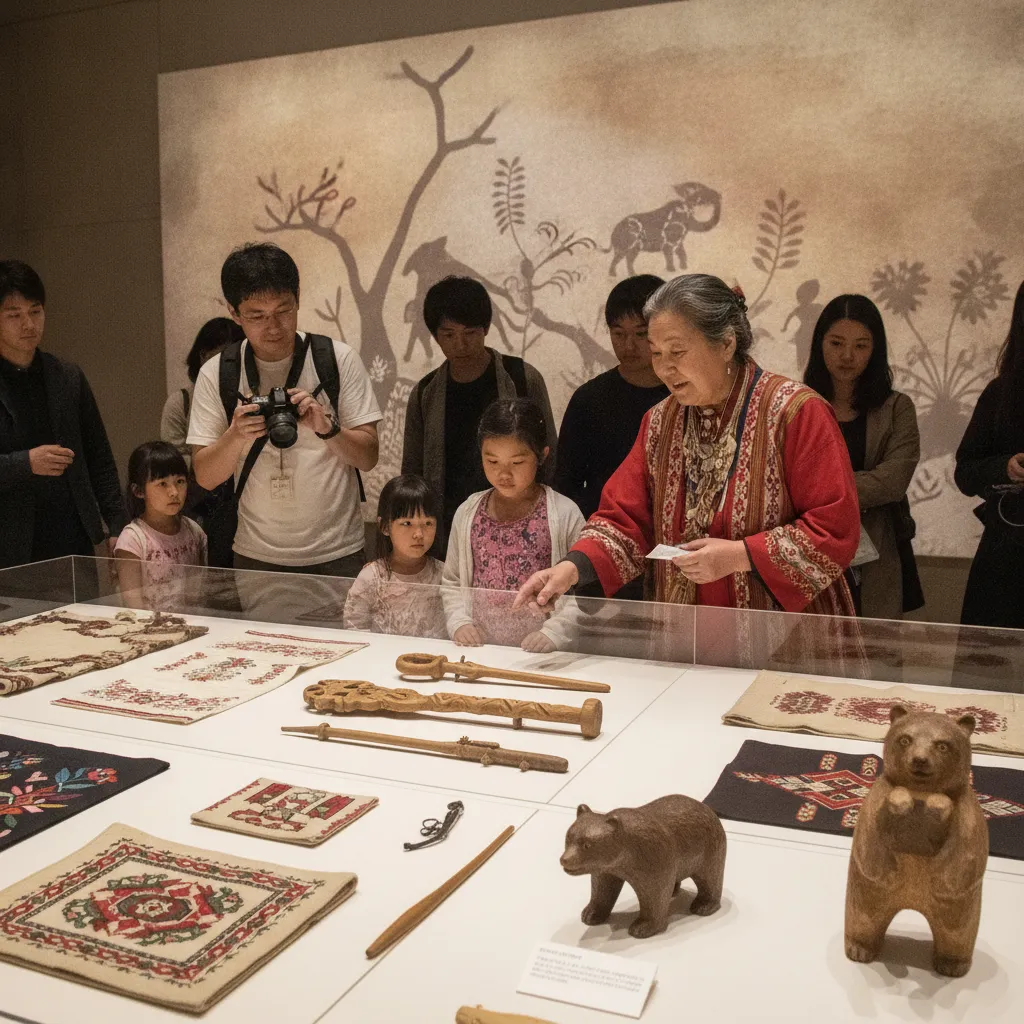
Visitors to the National Museum of Japanese History in Sakura can now immerse themselves in a profound exploration of indigenous identity through a new exhibition titled The Ainu and the Expositions: 150 Years of Experience. Jointly sponsored by the National Ainu Museum in Hokkaido, the showcase traces the journey of the Ainu people from the nineteenth century to the present day. By highlighting a spiritual worldview where deities known as kamuy reside in all elements of nature, the exhibit illustrates how these beliefs shaped a unique artistic legacy defined by harmony with the environment.
The galleries feature an array of stunning craftsmanship, including traditional clothing woven from bark fibers and adorned with intricate embroidery designed to protect the wearer from evil. Some of the most poignant pieces include woodworking artifacts more than 150 years old, several of which are recognized as important cultural properties. While these objects demonstrate exquisite skill, the exhibition does not shy away from the complex history behind them. Archival documents reveal a bittersweet duality, recounting both the heartache of being treated as curiosities in early colonial expositions and the genuine cross-cultural friendships that formed during those encounters.
As the narrative moves into the post-war era, there is a visible shift toward empowerment and self-representation. The exhibit chronicles how Ainu artists and performers began to proactively share their heritage on global stages, spanning from the 1970 Japan World Exposition in Osaka to preparations for Expo 2025 Osaka Kansai. Through contemporary video installations and personal commentaries from dancers, visitors gain insight into how today’s practitioners are fighting to preserve their ancestral traditions for future generations.
Running through November 29, 2026, this comprehensive look at Ainu history serves as both a celebration of resilience and a reflection on how indigenous peoples navigate visibility in a modern world. By bridging the gap between ancient craft and current performance art, the museum provides a space for guests to appreciate a culture that continues to evolve while remaining deeply rooted in its spiritual origins.