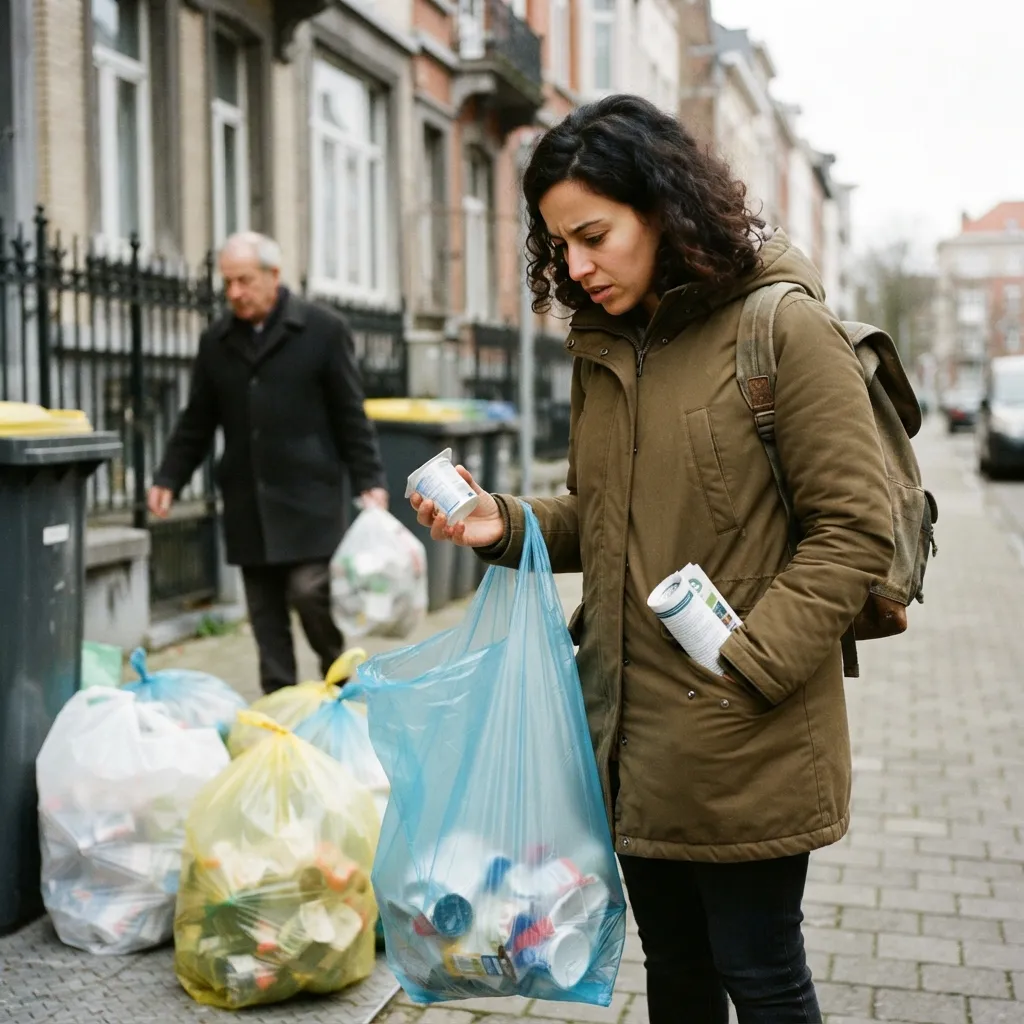
When a newcomer arrives in Brussels, one of the first lessons in integration involves a handful of brightly colored trash bags. To many, these rolls of plastic represent just another municipal rule to follow, but for those navigating the transition, they serve as a physical bridge between abstract environmental principles and actual behavior. Early on, the process is tedious, involving constant trips to a smartphone screen to verify whether a specific piece of packaging belongs in a blue bag for plastics or an orange one for organic waste. The gap between wanting to protect the planet and successfully sorting a yogurt cup is filled not by willpower, but by repetitive interaction with these visual markers.
These colorful bags function as an immediate communication system that simplifies complex data. While a digital guide provides comprehensive detail, the color of the bag offers a split second prompt at the exact moment of disposal. Over time, this transforms conscious effort into muscle memory. This shift illustrates a broader psychological truth about habit formation: information is most effective when it appears exactly where and when it is needed. By placing these cues directly in the kitchen, the city effectively moves the cognitive load from the brain to the environment, making sustainable living feel less like a chore and more like a reflex.
However, mastering the art of sorting extends beyond choosing the right bag; it requires synchronizing with the rhythm of the neighborhood. Because collection schedules vary by street, newcomers must integrate these timings into their personal weekly calendars. Often, the most effective reminder isn’t an alarm on a phone but the sight of neighbors placing their bags on the curb. These silent social cues create a collective choreography across the city, where residents coordinate their actions without ever speaking, turning private household chores into a shared community ritual.
Ultimately, these habits are reinforced through human connection rather than official brochures. Casual conversations with roommates or longtime residents reveal that today’s effortless routines were once hurdles for everyone_ including older generations who grew up in eras before strict sorting existed. From children learning through drawings in kindergarten to adults swapping tips over fences, waste management becomes a lens through which newcomers learn to read their new surroundings. Through this blend of visual prompts and social observation, what begins as a confusing set of regulations eventually settles into an invisible part of daily life.