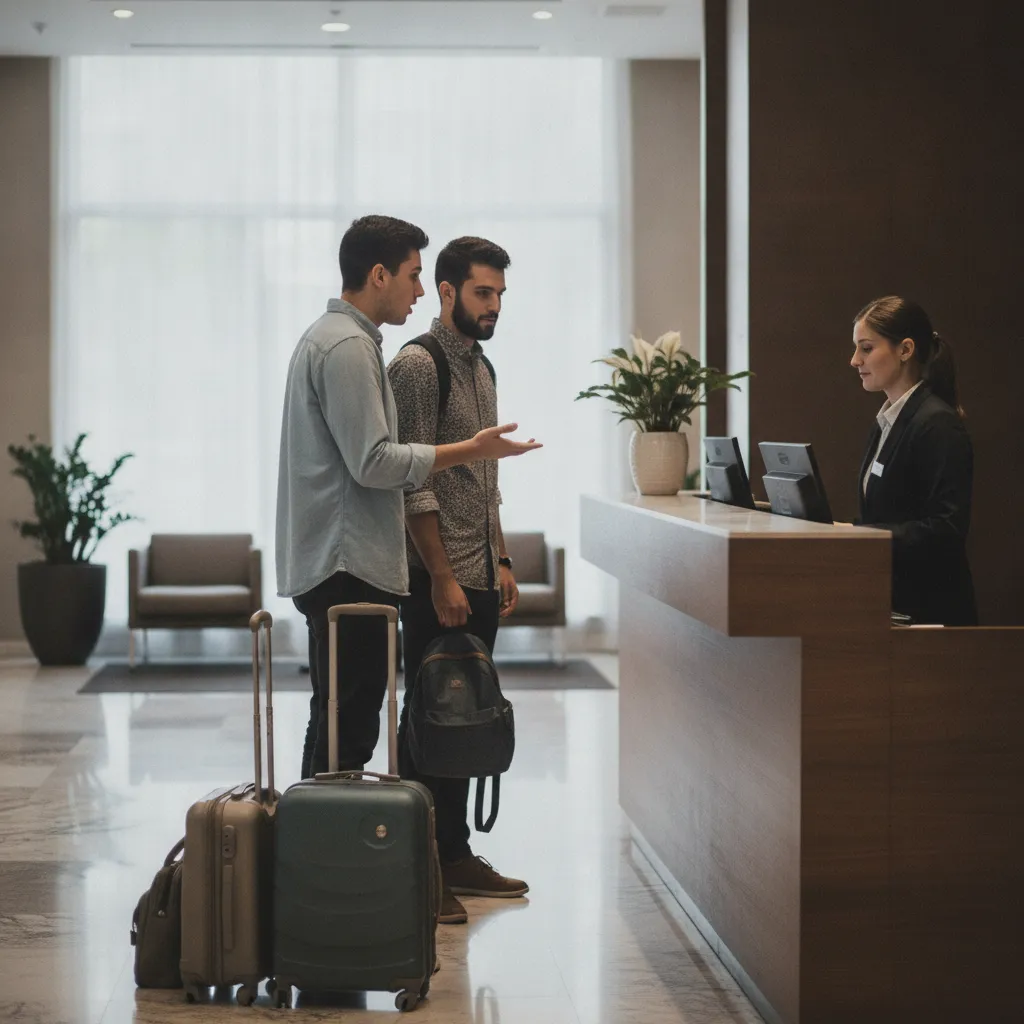
For many travelers, the act of checking into a hotel is usually a moment of relief and anticipation. But for a significant portion of the LGBTQ+ community, it is a high stakes calculation involving a split second decision on whether to refer to a companion as a partner or a friend. Recent data from Booking.com highlights this tension, revealing that only thirty four percent of British LGBTQ+ travelers remain out while abroad, even though seventy six percent are open with their close friends at home. It suggests that for more than half of these travelers, a core part of their identity is tucked away like luggage in an overhead locker the moment they leave the airport.
This habit of hiding is born from necessity rather than preference. For journalists and presenters who travel frequently to regions like the Middle East, the atmosphere can shift instantly from liberation to apprehension. Small gestures, such as removing a pride wristband or scrubbing a phone screen of photos with a partner, become survival strategies. In countries where loving someone of the same gender can lead to imprisonment, the fear felt during a simple interaction with a hotel clerk over a double bed is not mere paranoia; it is a rational response to systemic danger. This creates a paradox where romance requires a formal risk assessment and holding hands necessitates scanning the room for threats.
Perhaps the most sobering finding in recent research is that those who choose to stay in the closet report fewer negative experiences and lower levels of anxiety. While hiding effectively works as a shield, it transforms what should be an exhaling experience into an exhausting secondary job. Travelers find themselves managing multiple versions of their personality, forever on guard against one wrong word that could jeopardize their safety. Transgender individuals face an even steeper climb, navigating an escalating scale of anxiety that makes true relaxation nearly impossible in hostile environments.
Despite these fears, some argue that boycotting oppressive regimes may inadvertently isolate local queer populations who cannot simply fly away when things get difficult. There is an ongoing debate about whether visiting these places serves as a form of quiet diplomacy or merely provides financial support to problematic governments. Many discover that while state laws are draconian, individual locals—from taxi drivers to resort staff—are often curious and accepting rather than hateful. This distinction suggests that the conflict is often one of political hierarchy rather than personal prejudice among citizens.
Ultimately, there is a tipping point where the cost of admission becomes too high. Supporting defiant communities by frequenting gay bars in cities facing crackdowns can be an act of solidarity, but spending two weeks pretending to be someone else on a private vacation defeats the purpose of getting away. Fortunately, there are signs of progress, with three quarters of surveyed travelers reporting at least one positive identity linked experience abroad_and nearly half believing global acceptance is improving._