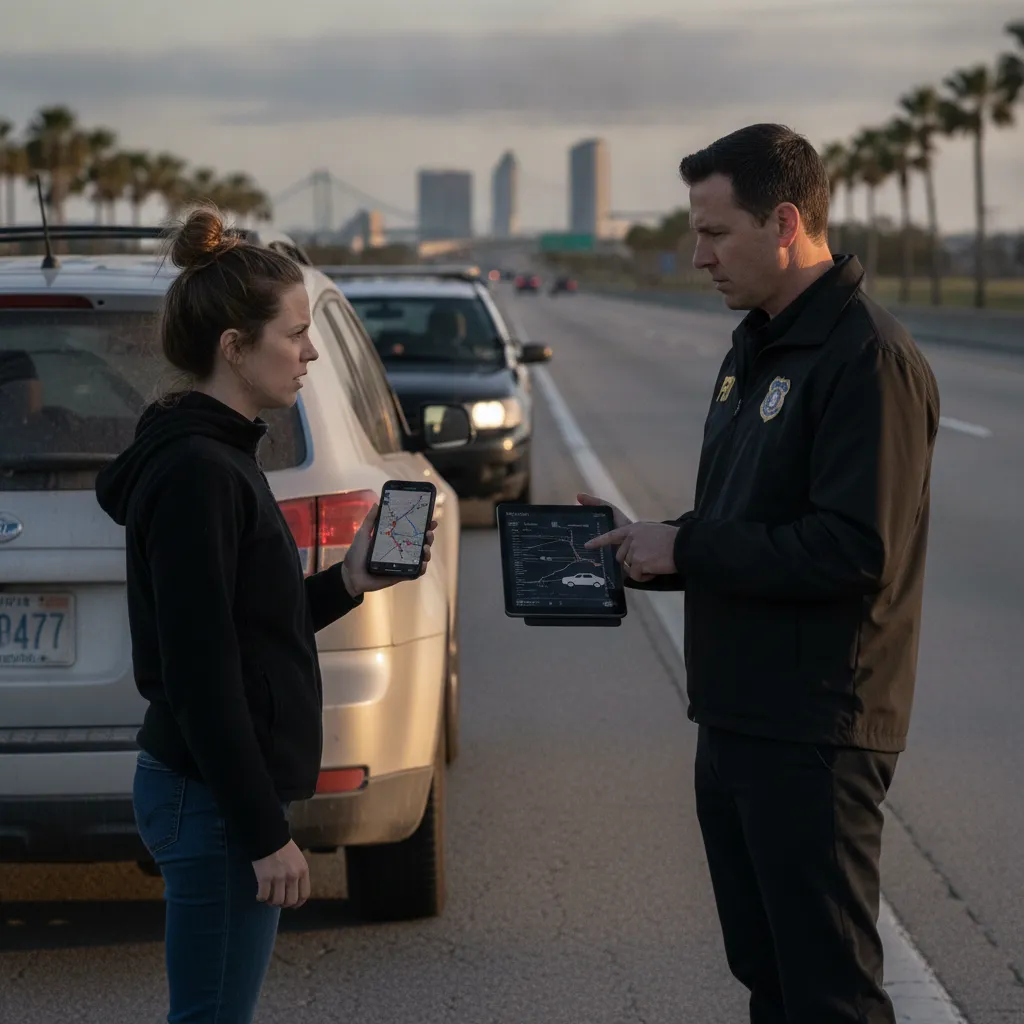
Grace Knowles was simply enjoying a cross country road trip in late 2025, traveling through states like Oregon and Texas while between jobs. However, her journey took a surreal turn near New Orleans when she was pulled over by an officer who claimed she had stayed in the left lane too long. After questioning her whereabouts and demanding proof of her travels, the officer revealed he was actually a special agent with the FBI. The true reason for the stop had nothing to do with her driving behavior and everything to do with an artificial intelligence system that flagged her travel patterns as suspicious.
During the encounter, the agent invited Knowles into his vehicle to show her a digital heat map of her movements across the United States. Every circle on the map corresponded to a photograph of her license plate captured by automated readers hidden on highway signs. According to the agent, this surveillance network is designed to catch human traffickers and drug runners by identifying anomalies in how people move across state lines. For Knowles, it meant being treated as a criminal suspect despite having committed no crime, illustrating a shift toward predictive policing where software generates suspicion without prior evidence.
This practice is becoming increasingly common as companies like Flock deploy advanced AI algorithms capable of tracking not only individual cars but also associations between different vehicles. Law enforcement agencies are utilizing what are known as pretextual stops—using minor or fabricated traffic infractions as cover to detain individuals flagged by these systems. These intel stops allow officers to bypass traditional legal hurdles, turning public roads into checkpoints based on opaque algorithmic queries that blend license plate data with commercial data brokers and arrest records.
The reach of this surveillance extends far beyond local police departments. Reports indicate that Border Patrol has expanded its monitoring deep into the American interior, coordinating with local authorities to intercept drivers moving away from border regions if their routes appear irregular. From business owners in Texas wrongly accused of money laundering to ordinary travelers like Knowles, more Americans are finding that their freedom of movement is being monitored by silent sensors and analyzed by machines that decide who looks suspicious before they ever hit the brakes.