
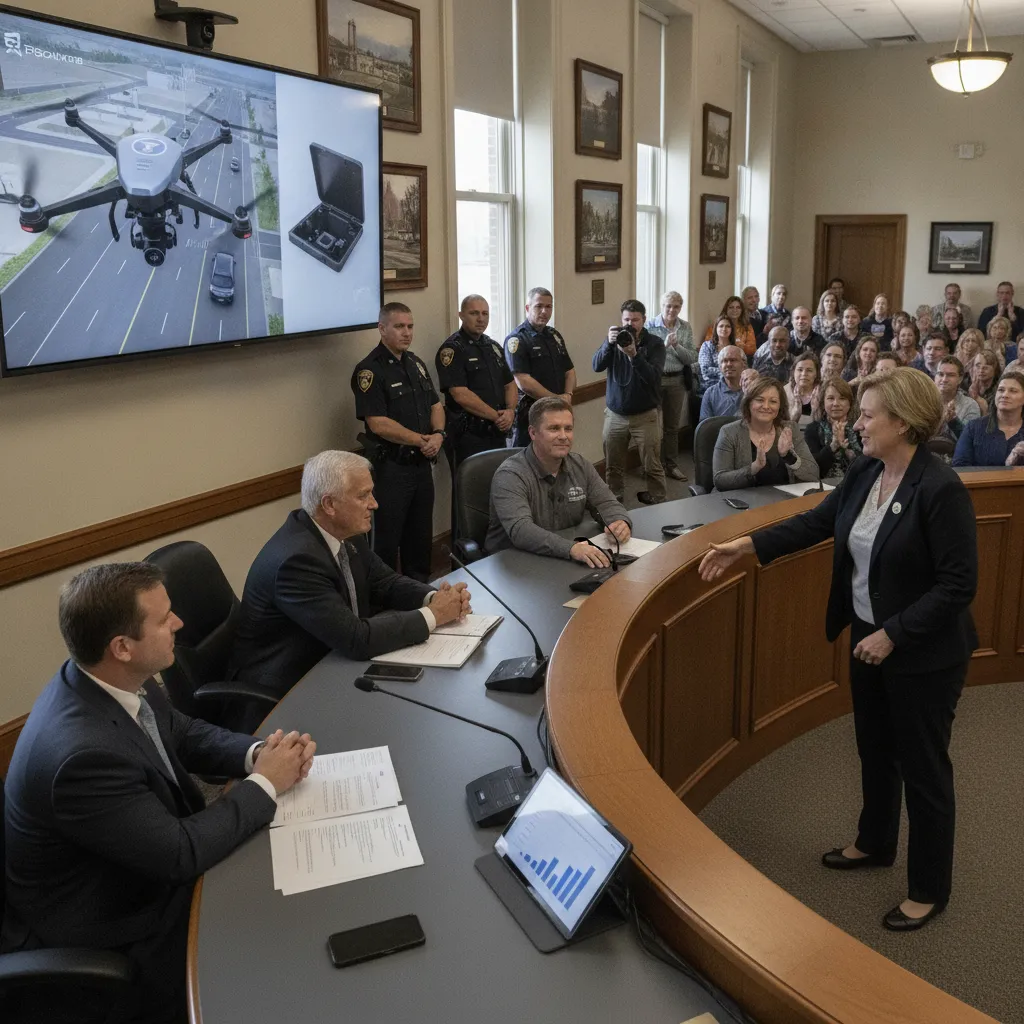
The Peoria City Council has given a unanimous green light to a massive investment in public safety technology, committing nearly 13.8 million dollars over the next five years. The agreement with Arizona-based firm Axon introduces a sophisticated suite of tools designed to modernize law enforcement operations, most notably through a Drone as First Responder program. By installing a network of automated drone docks across the city, officials hope these aircraft can reach emergency scenes faster than patrol cars, providing critical real-time intelligence before officers even arrive on site.
Addressing potential privacy concerns, city leaders were quick to clarify that the drones will not be used for random surveillance or peering into private residences. Instead, deployment will be strictly limited to active service calls. One specialized unit stationed downtown will even carry a life preserver specifically for rapid response river rescues. Beyond the skies, the partnership expands Axon’s existing relationship with the city by refreshing essential gear, including hundreds of new body cameras and tasers, along with upgraded vehicle and interview room recording systems.
The contract also pushes Peoria toward some of the more cutting edge applications of artificial intelligence and simulation. Officers will have access to virtual reality training modules tailored to help them interact more effectively with individuals experiencing schizophrenia or autism. Additionally, AI software will be integrated into administrative tasks to streamline the process of writing police reports. While Mayor Rita Ali admitted that the comprehensive package comes with a steep price tag, she emphasized that the council performed extensive due diligence before voting.
Police Chief Brad Dixon maintains that the financial cost is justified by the potential for improved security throughout the community. According to Dixon, every piece of tech included in the deal serves one primary purpose which is ensuring safer outcomes for both responding officers and the citizens they serve. With unlimited data storage now guaranteed under the new terms, the department aims to create a more transparent and efficient system of accountability moving forward.