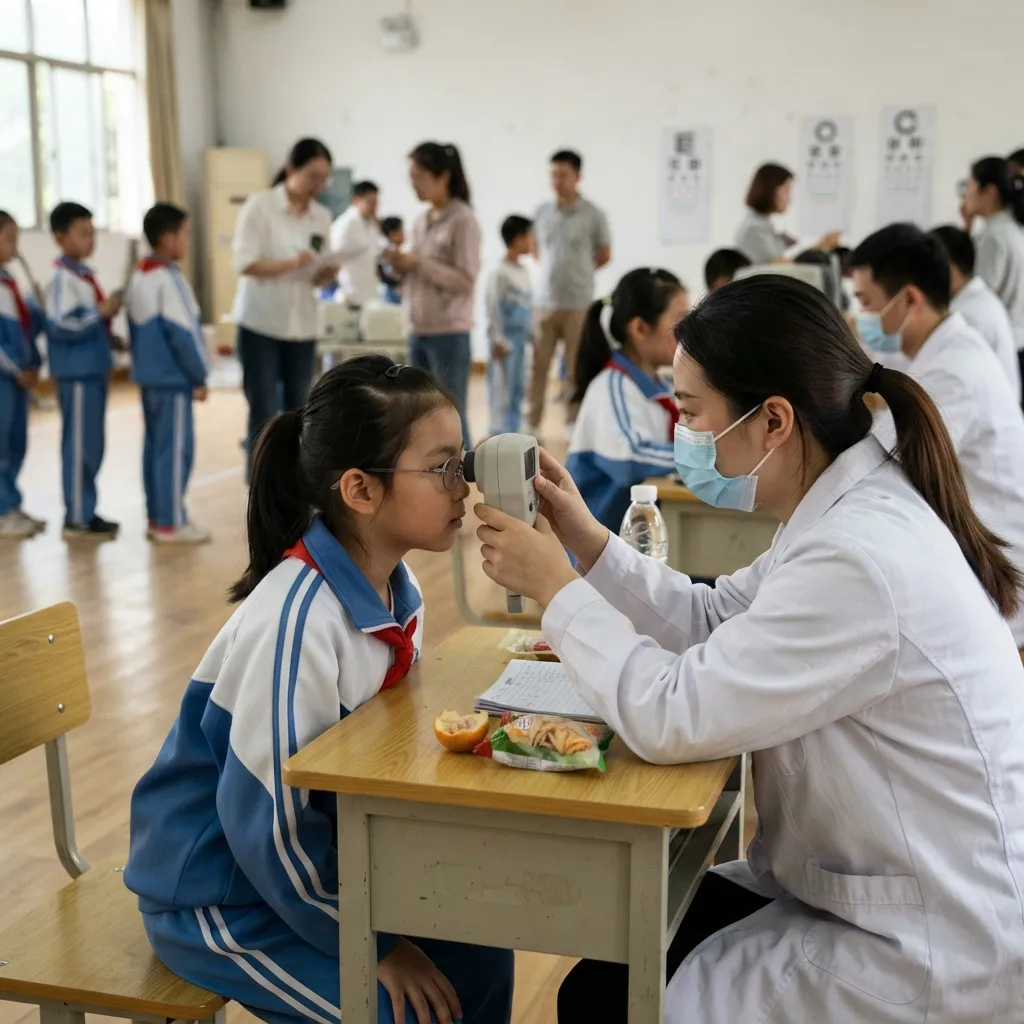
For years, parents and doctors have warned children about the dangers of spending too much time staring at screens, but a massive new study suggests that protecting young eyes requires a much broader approach. Researchers tracking more than 4,000 primary school children in southern China found that nearsightedness is not caused by any single bad habit, but rather by a combination of physical posture and general lifestyle choices. This long term look at pediatric eye health reveals that how a child sits at their desk may be just as important as what they eat.
One of the most significant findings involved the ergonomics of studying. Children who followed specific postural guidelines—maintaining a precise distance between their eyes and their books—were far less likely to experience rapid declines in their vision. By keeping a healthy gap between their chests and desks and holding pencils correctly, students avoided some of the most aggressive trajectories toward moderate myopia. These small adjustments in daily behavior acted as a protective shield during critical stages of early childhood development.
Surprisingly, the research also highlighted a strong connection between nutrition and eyesight. The data showed that kids who regularly ate fruits and vegetables and limited their intake of sugary foods tended to have better longitudinal refractive outcomes. This indicates that systemic health plays a silent but vital role in how the eye develops over several years, suggesting that a balanced diet provides biological support that helps stabilize vision against environmental stressors.
By monitoring thousands of students every six months for over three years, the scientists were able to identify different groups of children based on how quickly their vision worsened. They discovered that treating all children as one uniform group obscures the reality that some progress slowly while others crash quickly into severe myopia. Because these patterns are so varied, the researchers are now calling for school vision screenings to move beyond simple eye charts and begin incorporating comprehensive assessments of a child’s home habits and diet.