
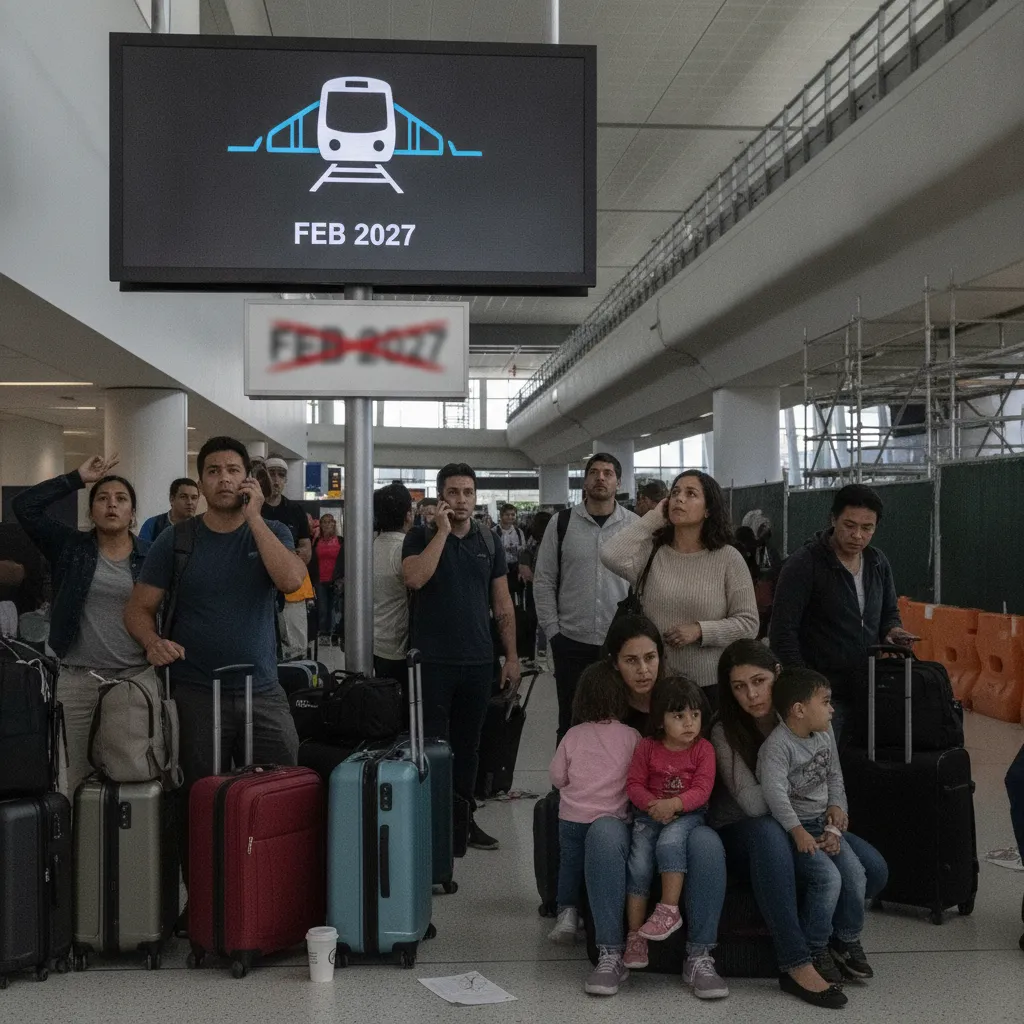
Travelers heading to Los Angeles might find themselves waiting quite a bit longer for a smoother commute through one of the world’s busiest hubs. The long awaited Automated People Mover at LAX has once again pushed back its debut, with current estimates suggesting the system won’t carry passengers until February 2027. Originally slated for completion in 2023, the two mile transit loop is now nearly four years behind schedule and roughly 1.4 billion dollars over budget. While airport officials hope to ease congestion before the 2028 Olympics, the continued disputes between contractors and city officials leave many wondering if the train will even be ready for the upcoming Super Bowl.
In a strange twist of irony, despite its struggles with ground transportation, LAX recently ranked as the most reliable large airport in America according to ConsumerAffairs. The ranking looked at cancellation rates and passenger options during disruptions, proving that while LAX is excellent at getting planes off the tarmac, it remains remarkably inefficient at moving people across its own property. Meanwhile, passengers flying out of Washington D C fared much worse, with both Reagan National and Dulles landing near the bottom of the reliability scale.
Beyond infrastructure woes, airlines are facing scrutiny over how they treat their customers wallets. The Federal Trade Commission has launched an inquiry into Delta, United, and JetBlue to determine if personal data and complex algorithms are being used to personalize ticket prices for individual flyers. At the same time, low cost carrier Frontier is seeing a massive shift in its business model; recent reports show a seventy one percent jump in average fare revenue per passenger compared to last year, signaling that the era of dirt cheap seats may be fading.
Long haul travel is also taking some unconventional turns with Alaska Airlines announcing new nonstop service from Anchorage to Tokyo Narita starting in May 2027. While convenient for Alaskans, the route requires passengers to spend over eight hours on a Boeing 737 MAX 8y without any lie flat beds available even in first class. It serves as a stark reminder for modern travelers to look closely at both their comfort levels and final costs before hitting the book button on their next adventure.