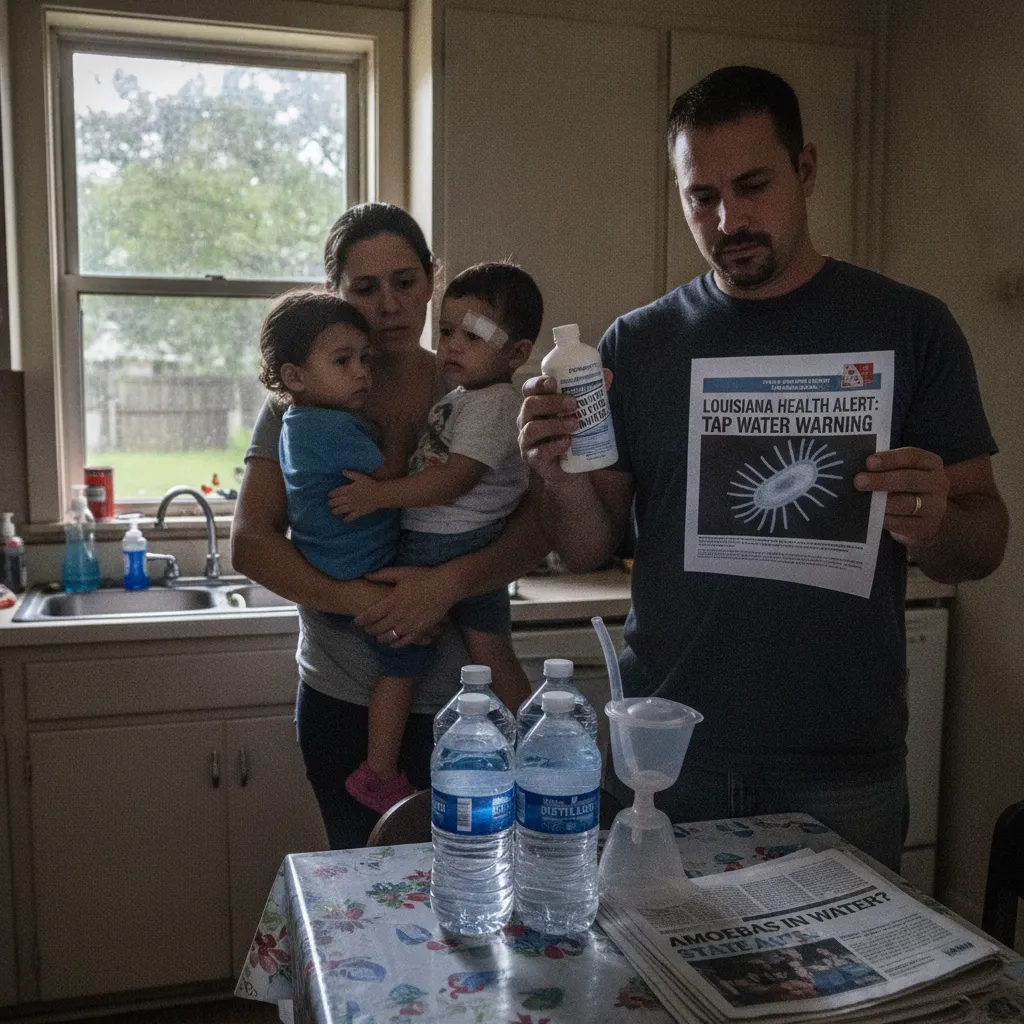
Louisiana health officials are urging residents to rethink how they use tap water at home following a string of rare but devastating amoeba infections across the state. Since the start of 2024, ten cases of Acanthamoeba have been reported, leading the Louisiana Department of Health to issue a stern warning about the dangers of using untreated water for nasal rinses and contact lens care. While these organisms are common in soil and various water sources, they can become lethal when introduced directly into sensitive areas of the body.
The majority of these recent cases involved Acanthamoeba keratitis, an aggressive eye infection primarily affecting contact lens users. Of the eight eye infections recorded, seven occurred in people wearing lenses, and five individuals suffered permanent vision loss as a result. Even more alarming are two separate infections involving the sinuses and the brain. One patient died from a brain infection, though officials noted that both victims had weakened immune systems and had used tap water in nasal irrigation devices.
Theresa Sokol, the state epidemiologist, emphasized that while such infections remain rare, their impact can be catastrophic. She stressed that maintaining strict hygiene protocols is essential, particularly for those with compromised immunity. Because this specific amoeba can thrive in everything from swimming pools to household humidifiers and drinking water systems, simply relying on city filtration may not be enough to prevent infection if the water enters through a cut or an open wound.
To mitigate these risks, health experts recommend that anyone using nasal irrigation devices switch to distilled, sterile, or previously boiled and cooled water. For those who wear contact lenses, officials advise against ever using tap water for cleaning or storage, suggesting specialized solutions instead. Additionally, residents are encouraged to remove their lenses before showering or swimming to avoid exposure. State authorities have already alerted local healthcare providers to ensure faster recognition and treatment of these rare conditions moving forward.