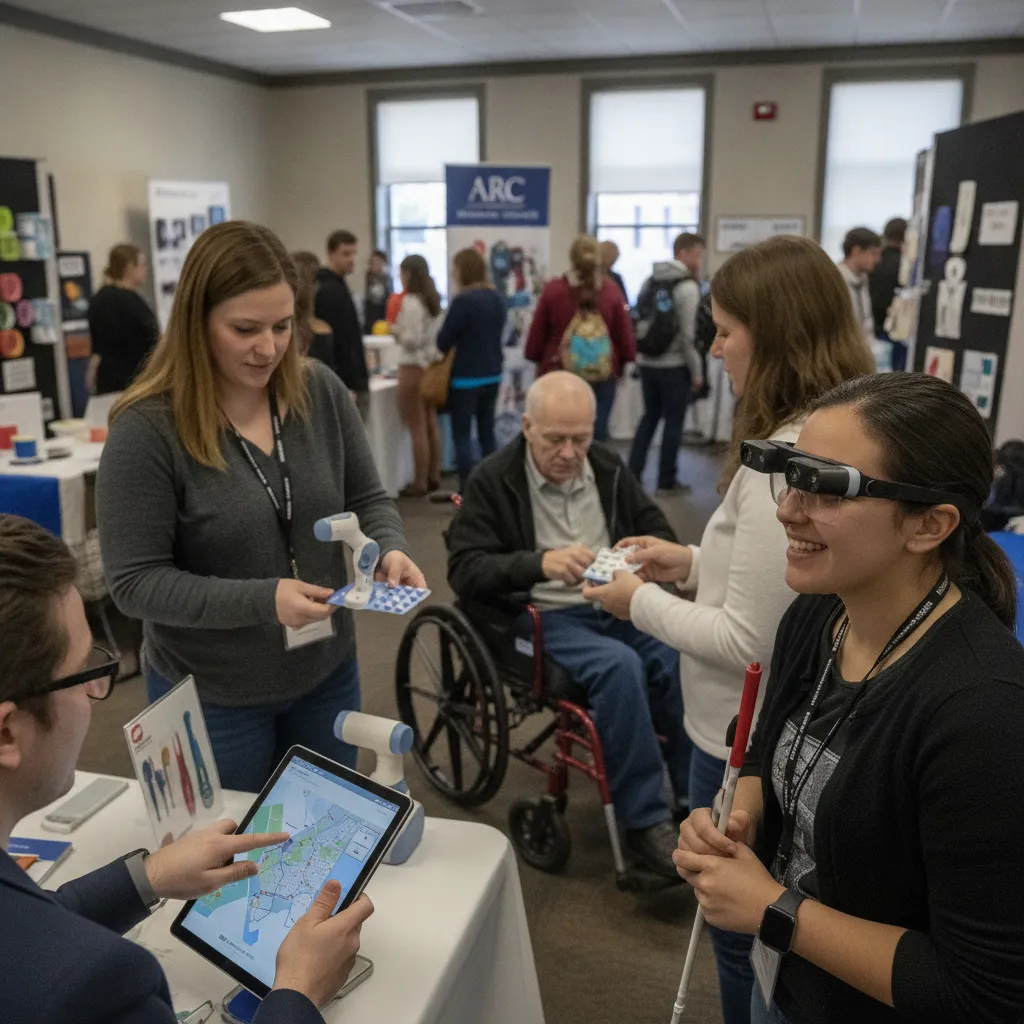
From smart glasses that guide the visually impaired through city streets to simple gadgets that pop pills from blister packs, the possibilities for independence were on full display this past Tuesday. Visitors crowded into the ARC Human Services headquarters in Canonsburg for an Assistive Technology Fair designed to showcase how adaptive tools can transform daily life for people with disabilities. The event served as a vital hub for families, educators, and caregivers to discover resources that often go unnoticed due to a lack of awareness or perceived high costs.
Michael Brownlee, Director of Communications and Development for ARC, noted that many people simply do not know what options exist today. He explained that the goal of the fair was to highlight affordable solutions that bridge the gap when traditional funding falls short. While the event welcomed the general public and those caring for aging parents, there was a strong emphasis on reaching school districts and intermediate units in Washington County to ensure students have the necessary support to thrive both in the classroom and eventually in the workplace.
Among the most inspiring exhibits was a presentation by TeraBridges, a robotics team from Upper St. Clair High School. Volunteer parent coach Sarah Beitler showcased their Toddler Mobility Trainers, which are 3D-printed wheelchairs created specifically for children aged one to five. By providing an inexpensive way for toddlers to practice self-propelling and developing core strength, these trainers prepare children for standard wheelchairs later in life. The student team further supports the community by converting holiday toys into switch-adapted versions for children with limited motor skills and partnering with Chatham University on modified electric ride-on cars.
Beyond hardware, the fair focused heavily on maintaining personal dignity through autonomy. Diana Petschauer, an assistive technology professional at ARC, demonstrated various wearable devices, such as watches featuring geofencing for individuals with Alzheimer’s or autism who may wander. She pointed out that even small modifications—tools that assist with brushing teeth or opening water bottles—are frequently embraced at senior centers because they allow users to perform basic tasks without relying on a caregiver.
The experience extended beyond table displays as staff led tours of a smart apartment used by the Student Transition Program. Here, students learn how integrated home technology can facilitate independent living long after graduation. According to Petschauer, these tools aren’t just about convenience; they are essential catalysts for employment. By showing potential employers that a specific tool can overcome a physical challenge, ARC hopes to prove that individuals with disabilities are highly capable employees who simply need the right equipment to succeed alongside their peers.