
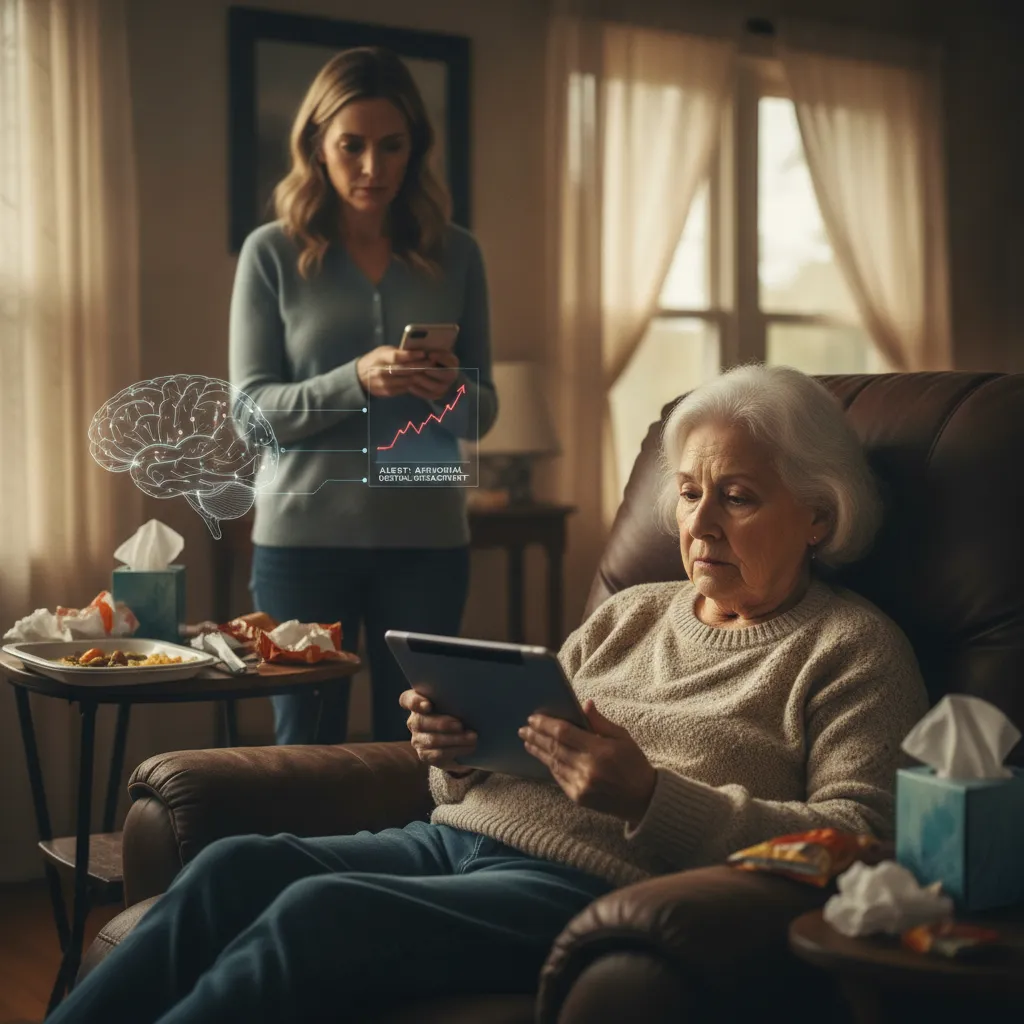
For years, the conversation around screen addiction has focused almost exclusively on teenagers and young adults, leaving a significant blind spot regarding the elderly. However, a new study published in Discover Artificial Intelligence suggests that older adults are increasingly susceptible to problematic digital habits that often fly under the radar of traditional medical screenings. To bridge this gap, researchers have developed a sophisticated deep learning framework capable of spotting the subtle drift toward compulsive technology use before it becomes a crisis.
Known as DL-MFE-EW, the system moves away from unreliable self-reported surveys, which can be skewed by memory lapses or poor time estimation in seniors. Instead, the model analyzes raw device logs, tracking everything from how often a phone is unlocked to specific spikes in application usage and notification activity. By processing these behavioral streams through a combination of neural networks, the AI can identify complex patterns—such as erratic late-night browsing or rapid app switching—that signal a decline in healthy digital boundaries.
What sets this tool apart is its ability to act as an early warning system rather than just a diagnostic mirror. The model can predict high-risk behavior approximately one week before it fully manifests, achieving an impressive accuracy rate of nearly ninety five percent during testing on users aged sixty and older. This predictive window provides a critical opportunity for family members or healthcare providers to intervene with simple lifestyle adjustments, like encouraging more face-to-face social interaction or limiting overnight screen exposure.
Developing this technology required overcoming unique hurdles, as digital footprints vary wildly among seniors due to differing health conditions and changing social circles. Unlike models trained on younger cohorts, this framework uses an attention mechanism to weigh specific moments of risk more heavily than routine usage. By focusing on those pivotal deviations in behavior, the AI transforms cold data into actionable insights for caregivers, offering a proactive way to protect the mental well being of an aging population in an increasingly connected world.